Our Founder
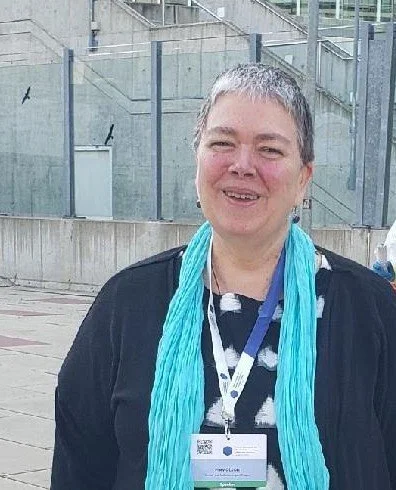
Dedicated expert with a wealth of research and knowledge.
Biologist Mary Olson is clear that her life’s mission is to bring to light the disproportionate harm from radiation to girls and women.
Through her work as a staff biologist and policy analyst at Nuclear Information and Resource Service, Olson spent decades working for greater health protections for communities impacted by nuclear activities. Olson studied radiation health consequences with some of the leading radiation researchers of the 20th Century including Rosalie Bertell, Alice Stewart, Helen Caldicott, and Steve Wing.
After the Fukushima Daiichi nuclear disaster in 2011, Olson decided to pursue questions about greater harm to girls and women from ionizing exposures. From a study of survivors of US nuclear strikes on Hiroshima and Nagasaki compiled over sixty years, Olson learned that there is a measurably greater harm from radiation to girls and women. She is the first to communicate, in explicit, easy to understand illustrations, that young girls are the life phase that suffers the greatest radiation damage and that this damage persists across the lifespan. Olson’s briefing paper on the subject has formed the basis of her core work ever since and has led to speaking engagements worldwide.
In 2014, she presented at the Vienna Conference on Humanitarian Consequences of Nuclear Weapons and in 2015, she spoke at the United Nations during the review of the Nuclear Non-Proliferation Treaty. In 2016, she was a featured speaker during a five-week tour of Japan and spoke on the medical consequences of nuclear weapons at an event sponsored by the International Committee of the Red Cross in Russia and presented as a featured panelist at the Gender Summit 9 in Brussels.
In 2017, Olson presented during negotiations on a new global treaty to ban nuclear weapons, which includes a preamble that references the disproportionate impacts of radiation.
In 2024, Olson co-authored the report “Gender and Ionizing Radiation: Towards a New Research Agenda Addressing Disproportionate Harm” with Dr. Amanda Nichols. Together, Nichols and Olson presented their report at the Third Meeting of States Parties for the Treaty on the Prohibition of Nuclear Weapons at the United Nations in March 2025.
Olson’s background in biology, biochemistry, and her own experience with radioactive contamination as a young woman have put her in a unique position to speak publicly on radiation policy from a health, safety, and humanitarian perspective. She hopes to inspire cancer prevention strategies worldwide that will contribute to more successful reproduction and the viability of future generations.
Click the Blog link to learn more about the history of Generational Radiation Impact Project.
Dr. Amanda M. Nichols, Principal Investigator
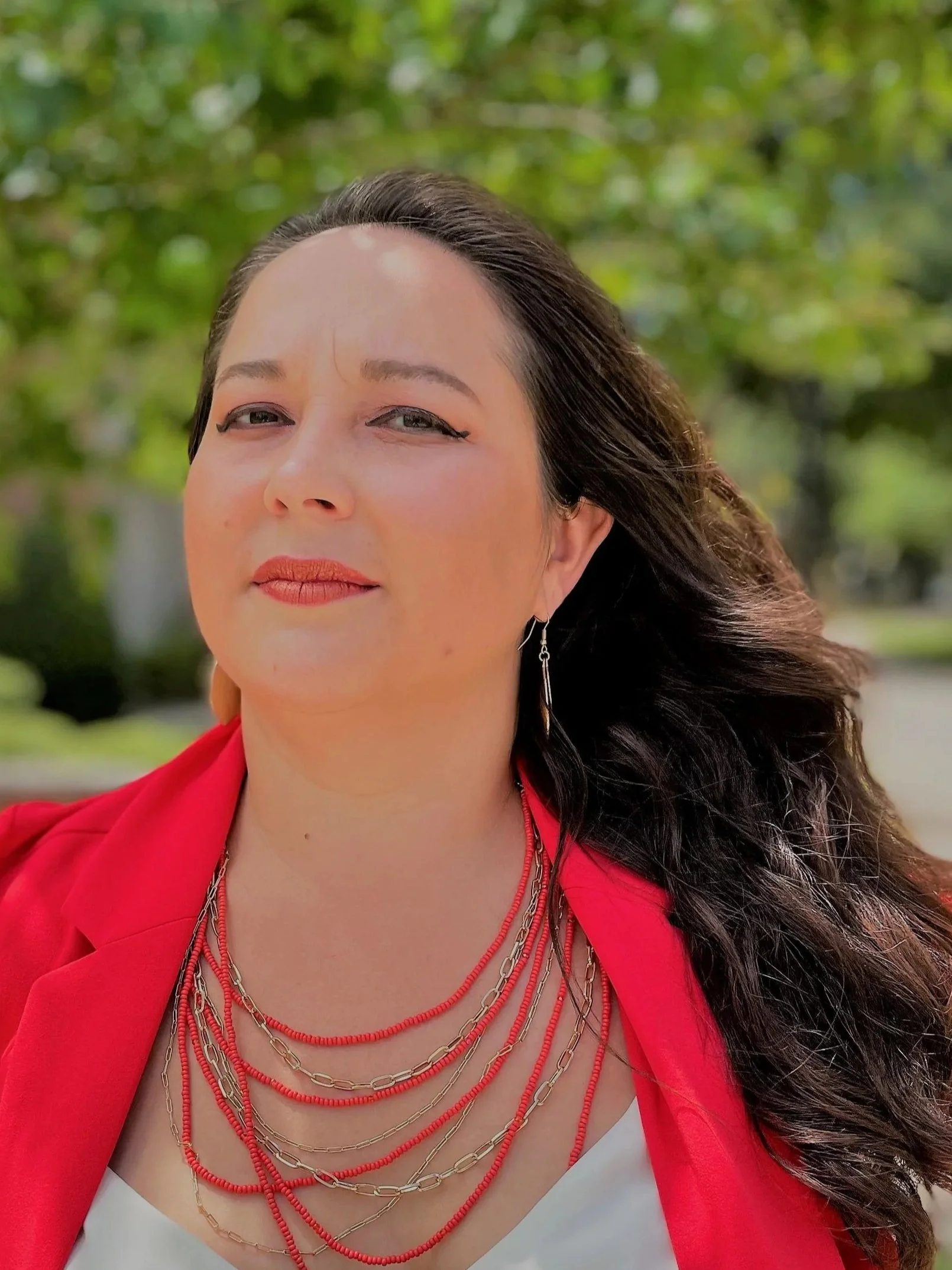
Dr. Amanda M. Nichols is an Independent Researcher who serves as the Principal Investigator for the Reference Girl Project. Nichols has broad interdisciplinary training in the environmental humanities and social sciences and holds a Ph.D. from the University of Florida (2021). She joined the GRIP team in 2025 after completing a post-doctoral research fellowship in Environmental Studies at the University of California, Santa Barbara.
Nichols is the lead author on the UN Institute on Disarmament Research report, co-authored with GRIP Founder, Mary Olson, “Gender and Ionizing Radiation: Towards a New Research Agenda Addressing Disproportionate Harm,” published in November 2024.
Nichols was first introduced to Olson and GRIP in 2018 during her PhD research. Her dissertation, “Women on the Edge of Time: Grief and Power in the Nuclear Age” illuminated the significant and unique contributions of women and the instrumental role that they played in the North American anti-nuclear movement. Olson was one of the women that Nichols interviewed and profiled in her dissertation. In her research, Nichols found that women’s anti-nuclear work has often been a productive site for women to challenge the gendered status quo and to foster integrative and synergistic networks motivated by shared interests in environmental protection. Her ongoing research examines the histories and futures of nuclear technologies with an emphasis on the social and environmental justice implications of those technologies in a climate insecure present.
In 2025, Nichols and Olson launched the Reference Girl Project. This project, which aims to develop a new model for radiological protections based on those most harmed, is a bold experiment for widening the conversation about the disproportionate impacts and health consequences of our unremitting societal commitments to nuclear technologies. The project will engender critical engagement from researchers and policy makers working across broad interdisciplinary fields to build a sustained conversation about the humanitarian consequences of nuclear weapons and the need to end our societal commitment to nuclear fission as a solution at many levels.
This work is critical as we endeavor to work toward a future not foreclosed to the disproportionate harm and negative health consequences of radiological violence resulting from our ongoing commitments to nuclear weapons.
Our Board
BOARD CHAIR
Elizabeth Waters, Knoxville, TN
SECRETARY
Dave Lochbaum, Chattanooga, TN
TREASURER
Brita Larsen Clark, Candler, NC
BOARD MEMBERS
Donna Glee Williams, Balsam, NC
Lianna Costantino, Sylva, NC
Lauren Loiacono, Asheville, NC
Joanne Sweeney, Sautee Nacoochee GA
Dr. Rosalie Bertell, Dr. Donnell Boardman, Dr. Ian Fairlie, Dr. John Gofman, Dr. Judith Johnsrud, Dr. Tim Mousseau, Dr. Marvin Resnikoff, Dr. David Richardson, Dr. Alice Stewart and Dr. Steve Wing.
We have found new inspiration in collaborations with Cindy Folkers, Marco Kaltofan, Dr Amanda Nichols, Cynthia Madansky, Christopher and LuAnne Hormel, and many other allies.
This work is supported by many. GRIP could not do the work we do without the generous support of The Fire Monkey Fund at RSF Social Finance. THANK YOU.
Enduring appreciation for GRIP Founding Board Members, the late Timothea Howard, Washington, DC, and Cornerstone Donor, the late Reverend Posy Jackson.
THANK YOU!
We are also grateful to the following professionals whose work and dedication has inspired this project. Thank you.
We are pleased and proud to have a new name!
Growing out of original work by the Gender and Radiation Impact Project (GRIP) founded in 2017--we are now, in 2025, the GENERATIONAL RADIATION IMPACT PROJECT. Our work now picks up the baton, shining in the collaborative work with so many others, and support from many more. We are still GRIP, in acronym, and in commitments.
In its first seven years, GRIP work was inspired by the landmark findings by founder, Mary Olson, that biological sex and exposure-age have major, and compounding impacts on the outcome of ionizing radiation exposure. In the first phase, GRIP’s work was primarily science communication—teaching the findings that exposure to ionizing radiation harms children more than adults, and females more than males.
GRIP was honored to provide education that led to the development of the Humanitarian pledge on the Humanitarian Consequences of Nuclear Weapons, and later the Treaty on the Prohibition of Nuclear Weapons (TPNW). As the Treaty moves ahead, GRIP has turned to the creating better radiation protection for all. Protection must address disproportionate radiation harm to girls and women—and so be centered on those most harmed. Nonetheless, in that process, it has become clear that there are additional challenges to protection that are universal.
We have turned a corner, are starting a new phase, and invite you to check us out!
This new chapter, emphasizes the multiple generations since the fission was packaged in the 1940’s. Intergenerational and cumulative impacts have come from the nuclear industrial complex and the many radioactive materials it moves, creates, and constantly releases to our environment. All of us are impacted to one extent or another by radioactive pollution of our air, food and water thanks to these industrial activities, over and above the natural radiation in our earth and sky.
GRIP is teaching about the human lifecycle and how environmental radiation impacts in all life stages, and looking at radiation itself from a wider lens.
GRIP is opening to a new growth phase. In November, 2025 the GRIP Board of Directors supported a new fundraising initiative to expand the capacity we have to develop this new work. Stay tuned!
It is the commitment to radiation protection that is aligned with those most-harmed that brings us to a focus on generational, and intergenerational impacts of radiation exposure, particularly from radioactive pollution. We have a wider path, and a new name. Join us!
GENERATIONAL RADIATION IMPACT PROJECT is a member-based organization. Members are much like Trustees, and serve by approval of the member group without term limits. If you would like more information about GRIP members, please contact us: GRIPcom2025@gmail.com.
Generational Radiation Impact Project is incorporated in North Carolina, and recognized by the IRS as a charitable organization under section 501(c )(3) of the tax code. Contributions are tax-deductible to the extent permitted by law.
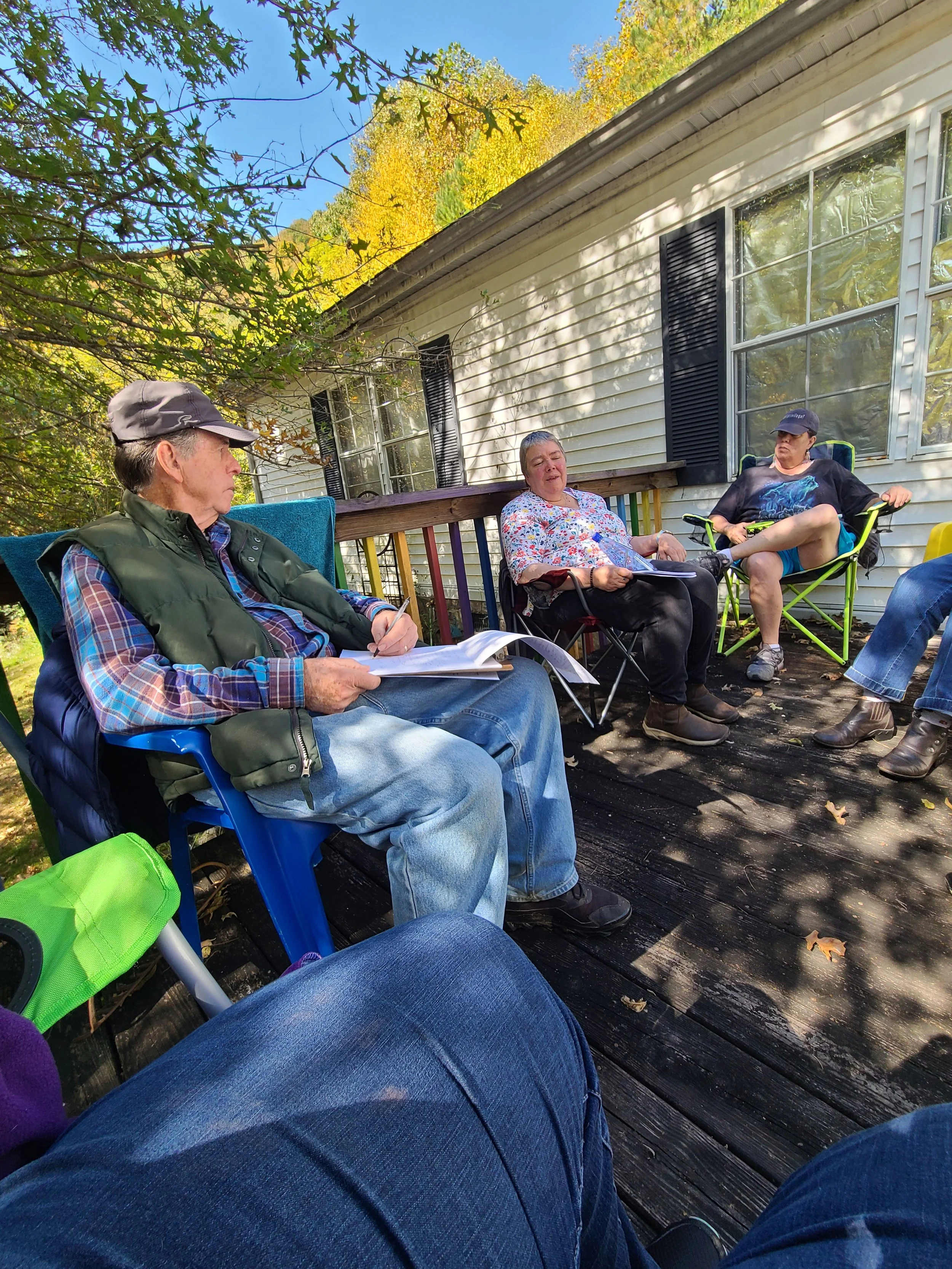
GENERATIONAL RADIATION IMPACT PROJECT Board Retreat, 2022